




Oaks at La Cantera is in San Antonio’s northwest corridor near UTSA, and the community lists public transportation as a community amenity, so bus access is part of the location picture. The practical answer, though, is that no one should assume a simple one-seat campus ride without checking the current VIA stop locations, route map, and whether the trip goes to the part of UTSA you actually use most.
If you are asking, Is Oaks at La Cantera on the bus route for UTSA?, the right way to think about it is not just “is there a bus nearby,” but “is there a reliable, walkable transit option that fits my class times and campus routine.” For a student or employee going to the University of Texas at San Antonio, those details matter more than a general claim of transit access.
What “on the bus route for UTSA” really means at this location
UTSA’s main San Antonio campus is in the same broad part of town as La Cantera, The Rim, and the I-10 and Loop 1604 area. That makes Oaks at La Cantera a more relevant starting point for UTSA trips than many communities farther across the city. Still, proximity to the university area does not automatically tell you whether the nearest bus stop is easy to reach on foot, whether the route runs directly to campus, or whether transfers are required.
VIA Metropolitan Transit serves UTSA, but routes and service patterns can change over time. Some trips are straightforward and some depend on the direction of travel, time of day, or whether you are headed to the Main Campus, a specific building, or a nearby off-campus destination. A route that works well for a midday class may be less practical for an early lab, an evening shift, or a weekend campus event.
Another important distinction is the difference between being near transit and being on a route that is genuinely useful every day. A nearby stop helps, but a bus commute becomes much more workable when the walking path is safe, the service runs often enough for missed connections not to derail your day, and the arrival point at UTSA leaves you with a reasonable final walk across campus.
For this property specifically, the most grounded fact to rely on is that public transportation is identified as a community amenity. That is helpful, but it is still broader than a route guarantee. Before making a lease decision based mainly on transit, use VIA’s official trip planner or route map, enter 15726 Chase Hill Blvd, San Antonio, TX 78256 as your origin, and compare results for the exact UTSA building or stop you expect to use most often.
How to verify whether the commute works for your schedule
Start with your actual destination at UTSA, not just the university name. A trip to a classroom near the center of campus can be different from a trip to athletics, a residence hall area, a research space, or a job nearby. On a large campus, the difference between the bus drop-off point and your final destination can matter almost as much as the ride itself.
Next, test the trip at the times you would really travel. Check a weekday morning run, a late afternoon return, and any evening or weekend trips you expect to make. That will show you whether service frequency changes during the day and whether a route that looks good in theory becomes less appealing when you account for waiting time and transfers.
It is also worth comparing the bus trip with a backup plan. Students often assume they will drive some days and ride transit other days, depending on weather, exams, or work schedules. If you expect to switch between modes, ask the leasing team practical questions about parking and then compare that with the walking distance to the nearest bus stop and the predictability of the transit trip.
Finally, if transit is a deciding factor, do one live test before you commit. Walk from the community area to the stop you would use, note sidewalk conditions and crossings, then ride the route to UTSA and back. That single test can answer questions that maps do not always show clearly, including whether the trip feels manageable carrying a backpack, laptop, groceries, or anything else you regularly bring home.
When this community makes sense for a UTSA bus commuter, and what to ask before leasing
Oaks at La Cantera may make sense for a renter who wants to stay in the UTSA and La Cantera area and values having transit as an option rather than assuming every trip will be by car. That is especially relevant if your weekly routine mixes campus time with nearby shopping, dining, or work in the same northwest San Antonio corridor. In that case, location within the broader district can be just as important as one individual route.
The trade-off is that transit suitability depends heavily on personal routine. If your classes start very early, end late, or change from day to day, the difference between a route existing and a route being practical becomes much bigger. A commuter with a fixed daytime schedule may find bus access more usable than someone whose campus hours move around constantly.
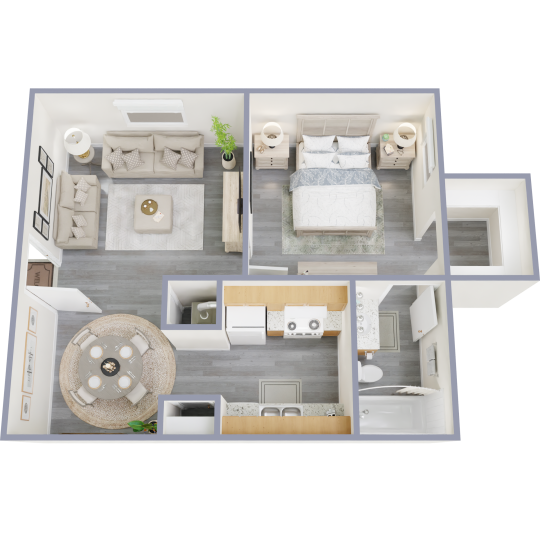
Property features matter here only where they affect commute habits. For example, if you expect to rely on transit part of the week, on-site laundry facilities can reduce the need for extra errands elsewhere, and select homes with washer and dryer connections should be confirmed if that is important to how you structure your week. Likewise, a one-bedroom or two-bedroom layout choice is less about the bus itself and more about whether you need a roommate arrangement that changes who drives, who rides, and when.
A good next step is simple and low pressure: map one real trip from 15726 Chase Hill Blvd to your specific UTSA destination in VIA’s official planner, then call or visit Oaks at La Cantera and ask which nearby stop current residents typically use for UTSA-bound travel. That gives you both the transit answer and the on-the-ground reality before you decide.